From the Blog

Cataleya Hiranrat was born with a tracheoesophageal fistula, a rare congenital birth defect that affects just 1 in 3,500 newborns. Even more extraordinary, her case was a unique variant seen in only 1% of such fistulas.
Thanks to the expertise of James Davis, M.D., and the teams at Pediatrix® Surgical Associates and Pediatrix® Neonatology of Texas, Cataleya was one of very few patients in the entire Dallas-Fort Worth metroplex to undergo a novel procedure that dramatically reduced her stay in the neonatal intensive care unit (NICU) from the typical 11 to 12 months to just four and a half months.
This innovative approach was not only the first of its kind at Presbyterian Plano Hospital, with only a handful performed across the region, but also a lifeline to Cataleya's military family, who had limited support nearby. Today, Cataleya is celebrating her first birthday and thriving.
Early Concerns During Pregnancy
From the beginning, prenatal anatomy scans raised concerns. Clinicians had a hard time finding Cataleya's stomach, and at 23 weeks, her mother, Helena, was told this could indicate a serious issue and that the family should prepare.
"When you have prenatal scans that don't really see the stomach very well, that's an immediate concern that there may not be an intact GI tract from mouth to stomach and there's no contents going through," said Dr. Davis. "Usually, that's visible. So, it's already an inkling that something's going on."
Helena went on bedrest at 30 weeks. She was told to make a medical directive, "which was scary because no one wants to have to create anything like that," she said. "I said if it's me or the baby, I would choose the baby over and over again."
When it came time for Cataleya's birth, Helena did not get skin-to-skin time with her daughter. Instead, Cataleya was taken immediately for evaluation and care.
"It was hard, but the medical team and Dr. Davis were really great about dispelling any anxieties that I had," said Helena. "If it wasn't for the support of Dr. Davis and the nurses, I don't know where'd we be."
As Helena made repeated trips to the hospital, she was pumping, caring for her family and continuing as a full-time student.
"We're a military family, so it's just my husband and I," she said. "For military families, your support is your team at the hospital and your spouse."
A Rare Diagnosis After Birth
Cataleya was born at 37 weeks on August 27, 2025. After birth, X-rays showed that the team could not pass a tube through her esophagus and that there was no visible gas in her stomach or intestines. Because babies typically swallow gas and have gas throughout their intestines soon after birth, those findings immediately told Dr. Davis there were significant issues and that Cataleya had a variant of tracheoesophageal fistula.
The team performed preparatory studies and ultrasounds, then placed scopes down both her esophagus and trachea. Because the connection between the two was in the neck, the team used wires, catheters and fluoroscopy to isolate and identify it before moving forward with surgery.
A Full Team Approach
The surgery required a full-team approach, including anesthesiology and support from one of Dr. Davis's surgical partners. Ultimately, they found the connection, severed it and tied it off.
In many cases, surgeons may find either a connection to the rest of the esophagus or enough length to connect the ends in short order. For Cataleya, that was not the case.
"There's a whole additional chapter to this because when I was done, the end of the esophagus was basically in the incision in the neck, way too far from the bottom end of the esophagus to connect them, and it had a fresh repair line," said Dr. Davis.
Dr. Davis explained to Cataleya's parents that the area needed time to heal. Because there was nowhere for her saliva to go, she would need to be fed through a stomach tube. She also needed to remain in the NICU, so nurses and other resources were available to provide suction and protect her airway while everything healed.
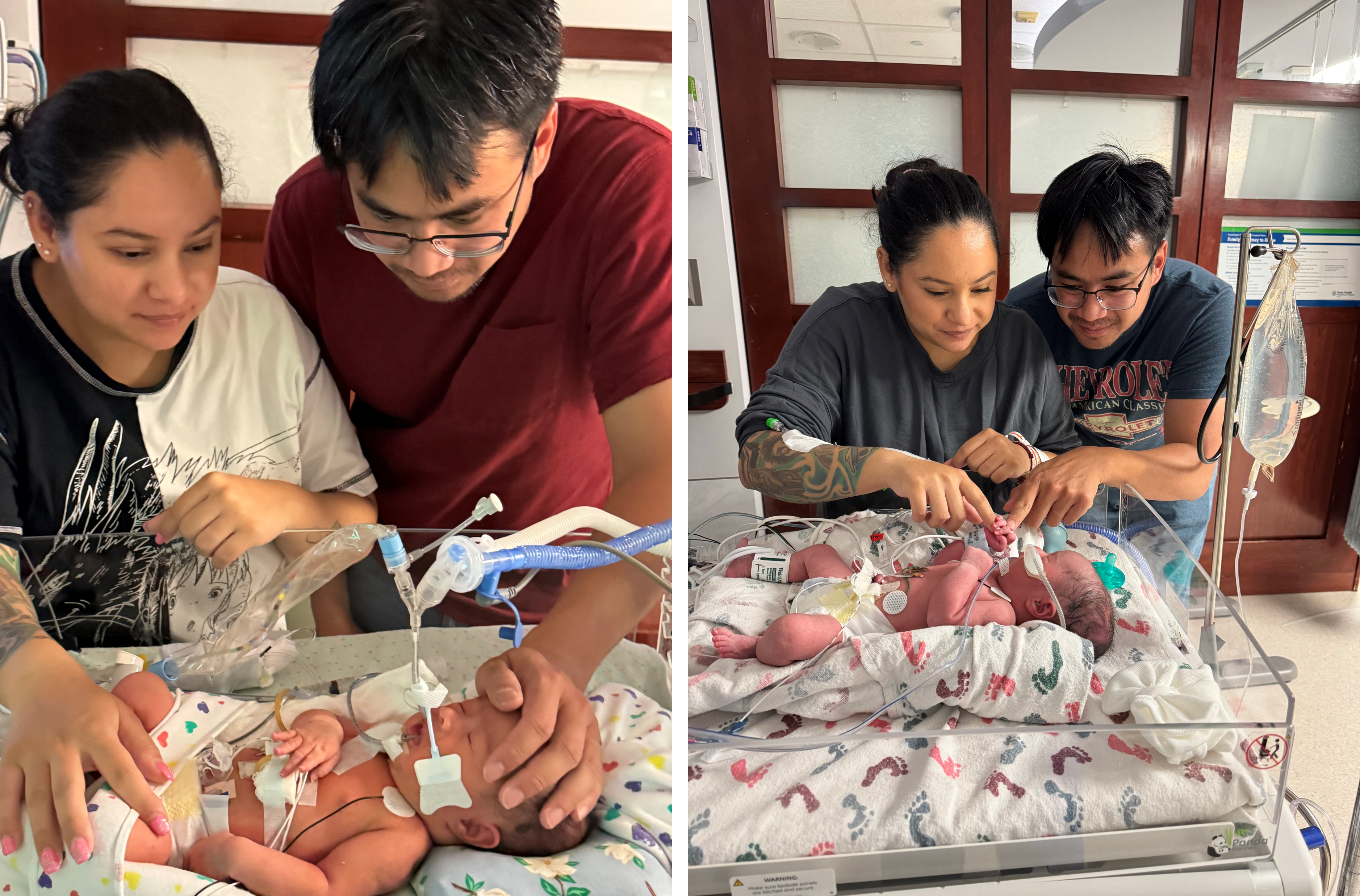
Bridging the Gap in Cataleya's Esophagus
After a month, Dr. Davis asked the NICU team to begin pushing a blunt object down Cataleya's esophagus to try to stretch it out – an established practice that can help lengthen the tissue. There was no guarantee it would work, especially with scar tissue in the neck and the anatomy located extremely high.
"Very diligently six times a day over the next several weeks, the nurses would do this at the bedside and hold it," said Dr. Davis. "Poor Cataleya would have to cope with it and yet still be the interactive, playful neonate and infant that she became."
Each month, the team performed a study to determine how close the two ends of the esophagus were. Often, this approach does not work, and surgeons must determine that there is not enough esophagus to bring the ends together. In those cases, the stomach may need to be brought into the chest and used as a conduit – a major operation typically performed when a baby is 10 or 11 months old, and until then, it is not usually safe for the baby to go home.
At three and a half months, the team decided to try to connect the ends.
"We did it with a camera, scopes and small incisions," said Dr. Davis. "The gaps were far apart but using an extremely new technique in the pediatric surgery world, I was able to gradually stretch them together using traction internally between stitches. After the first operation her esophagus was unstretched, so she would go back to the NICU and return to the operating room three days later, and I would stretch it a little bit more. On the third try, they were connecting, and I was able to open and connect the two parts. So, she has an all-native esophagus. We were able to bridge that gap and stretch it out."
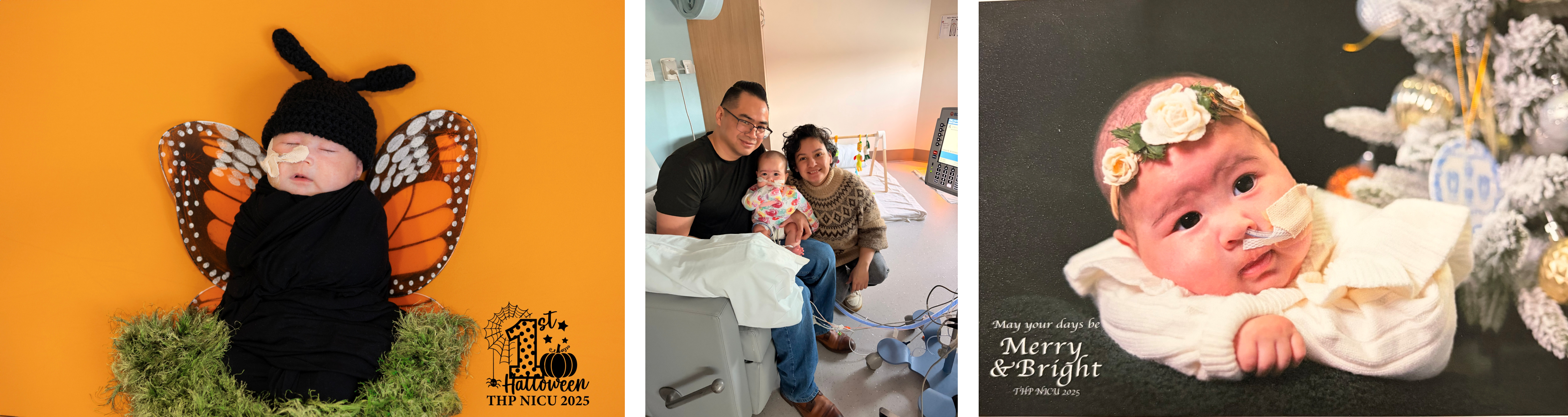
Home at Last
After another month in the hospital, Cataleya was able to leave the NICU and go home to the Hiranrat family.
"The best part about all of this was that mentally she was all there and very much became the darling girl of the NICU," said Dr. Davis. "All the nurses wanted to play with her. Despite everything that she went through, she was just charming and the life of the party."
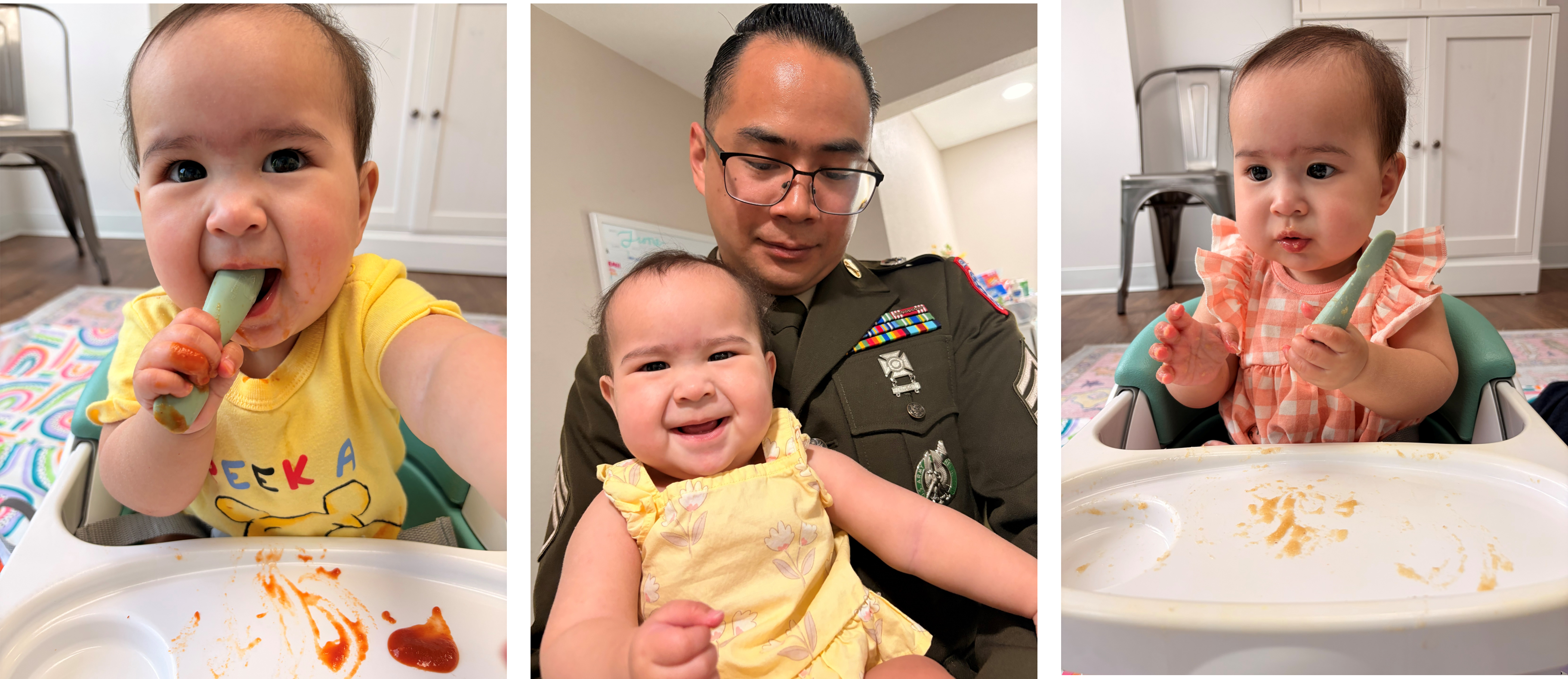
Now a year old, Cataleya is thriving – a milestone that reflects both her resilience and the coordinated care she received from her surgical and NICU teams.
"Looking at her and everything she's been through, I'm honestly very surprised at how far she's come," said Helena. "For her to be OK so early, it's miraculous. We were told that this surgery had not been done before, so the fact that it was extremely successful and she's thriving I think can help a lot of people. I'm excited to see how she continues to grow."
Learn more about our pediatric surgery and neonatology services or find care in your area.
The latest from the Blog


Recruitment Roundup
From the Blog