From the Blog

When Robert, Roger and Ryan Reis arrived earlier than expected, they made history at Boca Raton Regional Hospital in South Florida. Born prematurely in February 2026, the brothers were the first set of triplets cared for in the neonatal intensive care unit (NICU) by Pediatrix® Neonatology of Florida in at least a decade. Seven months later, they are home, growing and thriving.
Their story began long before their NICU stay. Amanda Inocencio and her husband, Fernando, had waited years for the chance to grow their family. After three years of trying to conceive naturally, Amanda learned her fallopian tubes were congested. She had surgery to clear them and continued trying to get pregnant for another year before beginning in vitro fertilization (IVF). After her first round of IVF, she became pregnant.
A Surprise at 12 Weeks
At their first ultrasound, Amanda and Fernando learned they were expecting twins. Because the pregnancy was considered high risk, Amanda began seeing Caroline Stella, M.D., of Maternal-Fetal Medicine Specialists of Boca Raton, part of Pediatrix® Medical Group. Then came the appointment the couple would never forget: their 12-week ultrasound revealed not two babies, but three.
"The sonographer said, 'Oh, there's a third one here,' and we were not expecting that," said Amanda. "My husband almost passed out!"
Fernando was shocked. "I thought she was joking, to be honest," he said. "I remember vividly, she said, 'Oh, and here's the third,' and I thought, 'Correct, it's the third time that we're doing the ultrasound.' And she said, 'No, that's the third baby.' I said, 'You're kidding me.' We started laughing and crying at the same time."
Although Amanda was nervous about carrying triplets, especially knowing the pregnancy was already high risk, the babies were healthy, and she remained focused on staying positive.
"We never thought anything was going to go wrong," she said. "We were very positive. I didn't want to have any bad energy or thoughts."
Preparing for an Early Arrival
Amanda's pregnancy remained healthy and, thankfully, uneventful until 31 weeks gestation, when she went into labor. That is when Howard Brenker, M.D., neonatologist, first met the family and consulted with them ahead of delivery.
"We were trying to stop her labor and give her a couple doses of steroids to help mature the babies' lungs, because being born at 31 weeks would put them at a higher risk of having immature lungs," said Dr. Brenker.
With careful monitoring, Amanda was able to hold off labor for a couple more weeks. Delivery was scheduled for 34 weeks gestation, but the triplets had other plans.
"At 33 weeks, her pressures started increasing and her labor increased," said Dr. Brenker.
The team prepared two operating rooms for the triplets' delivery, which was attended by about 20 medical staff members. For Amanda and Fernando, the preparation and communication from the care team helped ease the uncertainty of the moment.
"There's much more going on besides the technical aspect," said Fernando. "There's the human part, and that's where the whole medical staff did a fantastic job assisting us in the best way possible. On our end, we were pretty calm. We had a good idea of what was happening because they explained everything ahead of time, and everything was well prepared."
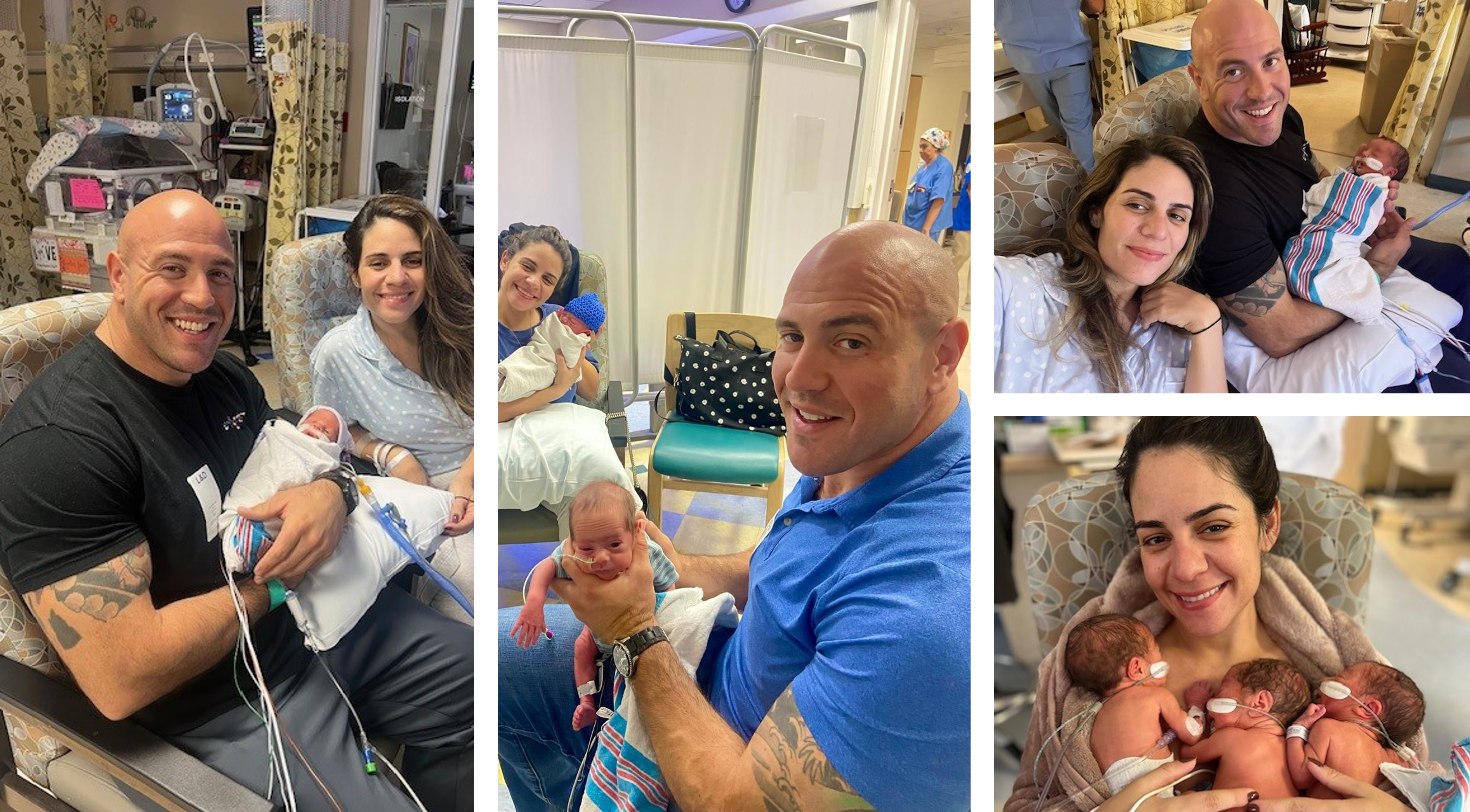
The team delivered one baby at a time, placing each in a warmer before nurses took over once the babies were stable. Two of the boys weighed about four pounds, and one weighed around three and a half pounds. Twenty-four hours after delivery, Amanda was able to meet her sons.
Growing Stronger in the NICU
Despite their early arrival, Robert, Roger and Ryan quickly showed encouraging signs.
"These babies did so well," said Dr. Brenker. "They had no real respiratory distress. I thought we might have to intubate them and give them surfactant, but they never required it. Their X-rays all looked fairly clear, and they just required some continuous positive airway pressure (CPAP), and they weaned fairly quickly off that."
During the following weeks, the focus shifted to feeding and growth. Amanda was able to produce some breast milk and supplemented with donor breast milk as needed. The boys progressed faster than expected, tolerating feedings by mouth and avoiding ongoing respiratory issues.
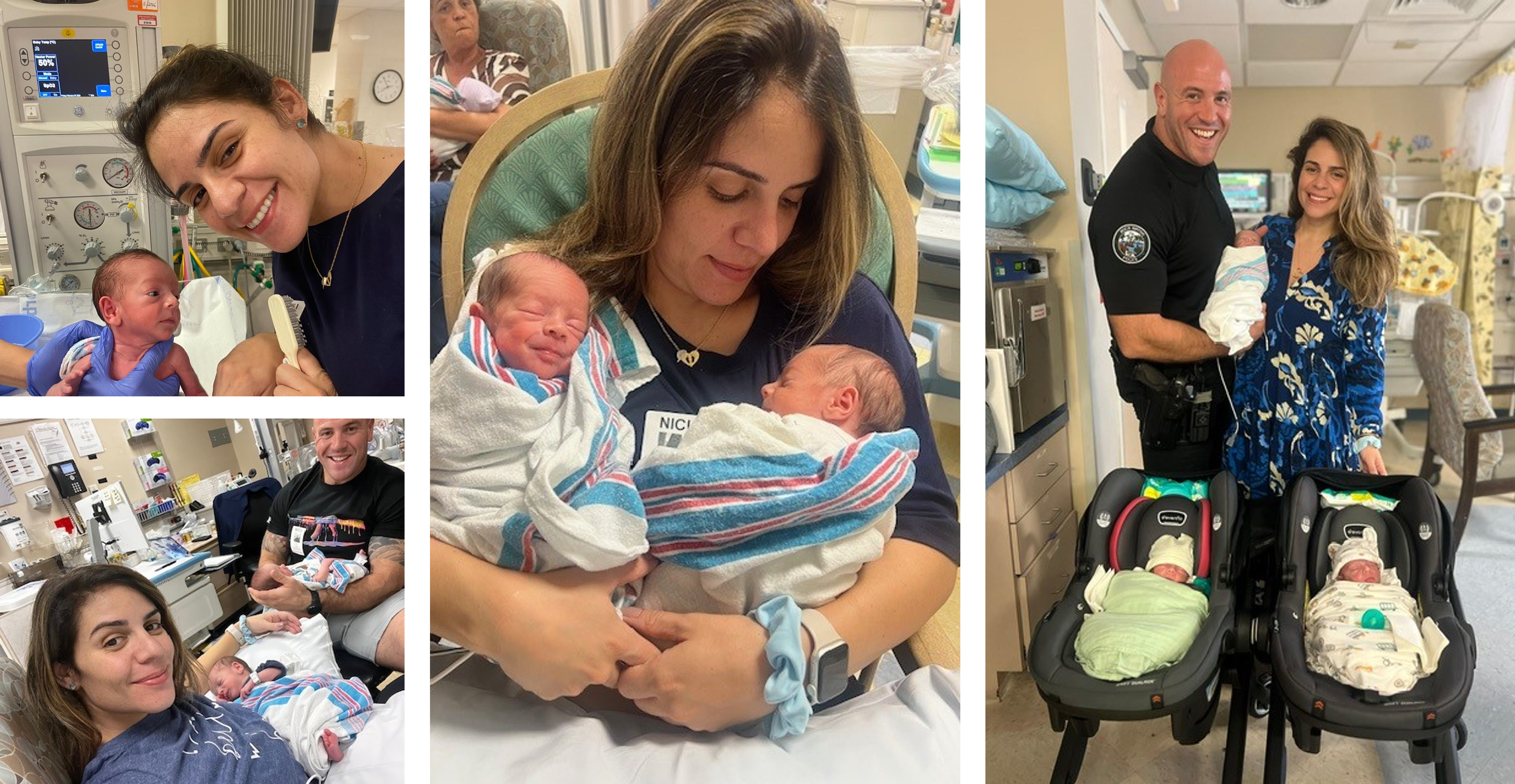
"They went home a lot sooner than I thought they would," said Dr. Brenker. "Most preemie boys end up needing to stay a little bit longer, around 36-plus weeks or so. But they were able to do everything they needed to do – tolerate feedings by mouth and have no respiratory issues – so they went home around 35 weeks."
Looking back, Amanda is grateful for the time her sons spent in the NICU under the nurses' care while she recovered from surgery. By the time Robert, Roger and Ryan were ready to go home, she had healed and felt prepared to care for them. The family was also able to continue the changing, feeding and sleeping schedule the boys followed in the hospital, which helped Amanda and Fernando rest when the babies slept.
"It worked amazing," said Amanda. "Not only did they train the babies, they trained us."
Thriving at Home
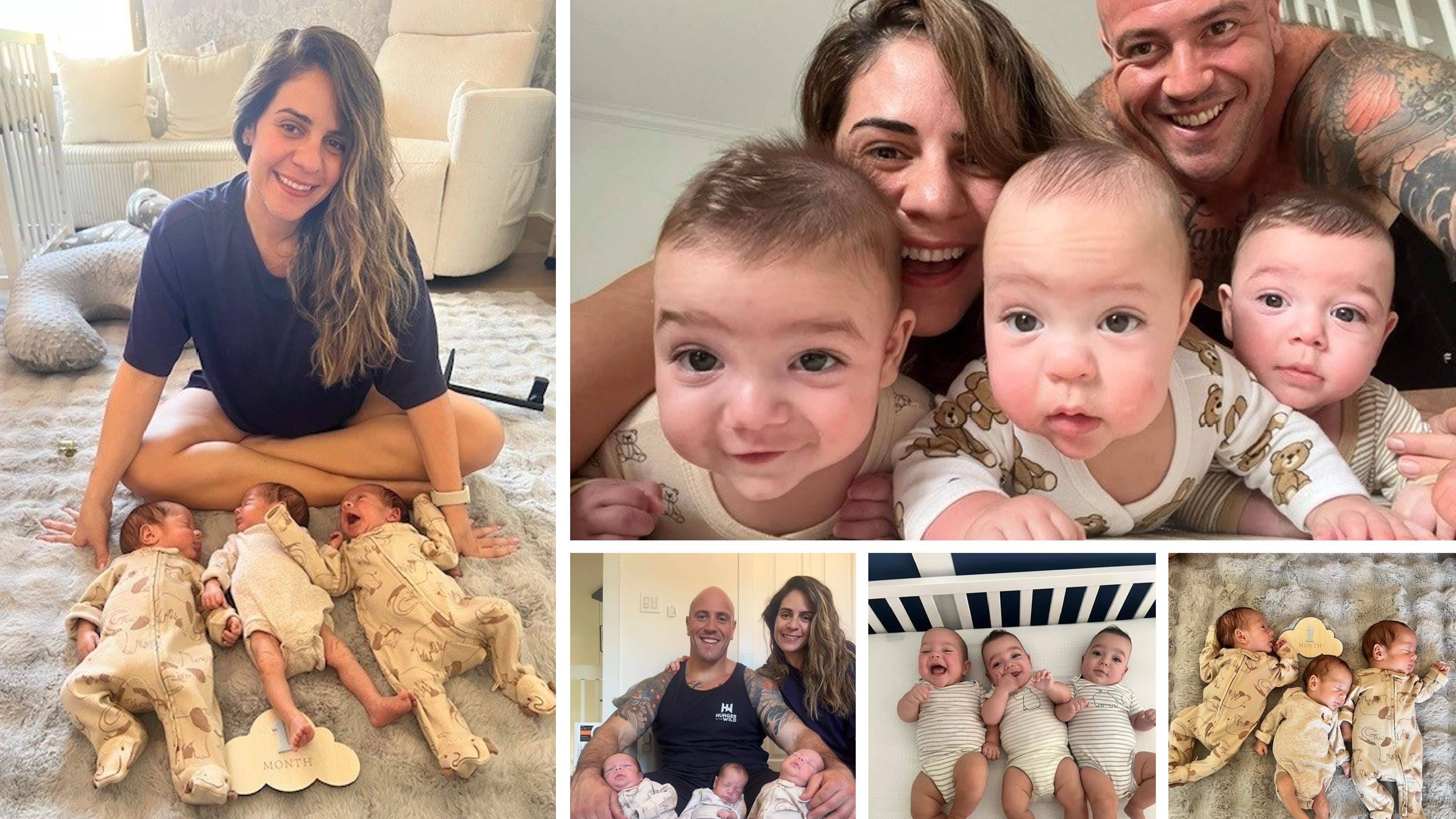
Today, Robert, Roger and Ryan are seven months old and thriving. The brothers weigh between 16 and 18 pounds, are eating solids, rolling over on both sides and beginning to show signs of crawling. For Amanda and Fernando, life at home with three babies is busy, carefully coordinated and full of joy. The schedule they learned in the NICU has helped them manage the constant rhythm of feedings, diaper changes, naps and playtime, giving the family a sense of routine as the boys continue to grow.
Their sons' progress is a joyful reminder of how far they have come – from a surprise triplet pregnancy to a carefully coordinated delivery and a NICU journey that helped prepare the whole family for life at home.
Learn more about our neonatology services or find care in your area.
The latest from the Blog

Attend Our Next NEO and OB Grand Rounds
From the Blog

